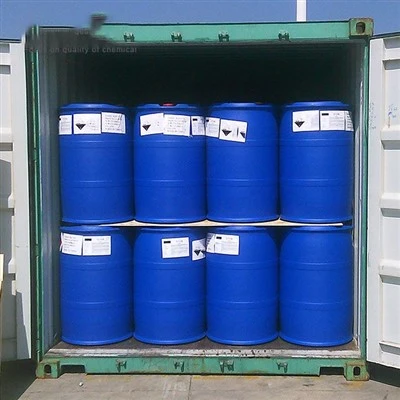
Hey there! As a supplier of Liquid Hexene, I often get asked about the odor characteristics of this substance. In this blog post, I'm going to dive deep into what makes Liquid Hexene smell the way it does and why that matters.
First off, let's get a bit technical. Liquid Hexene belongs to a class of hydrocarbons known as alkenes. These are organic compounds with carbon-carbon double bonds, and they have some unique properties, including their smell.
So, what does Liquid Hexene actually smell like? Well, it has a rather distinct, sharp, and somewhat sweet odor. It's not the kind of sweet smell you'd associate with candy or fruit. Instead, it's a more chemical - industrial kind of sweet, mixed with that characteristic sharpness that's common to many hydrocarbons.
This odor is a result of its molecular structure. The carbon - carbon double bond in hexene affects how the molecules interact with the olfactory receptors in our noses. When the hexene molecules enter our nasal cavity, they bind to these receptors, sending signals to our brain that we interpret as a particular smell.
One thing to note is that the odor of Liquid Hexene can vary slightly depending on its purity. Higher - purity Liquid Hexene usually has a more intense and well - defined odor. Impurities can sometimes mask or modify the natural smell. For example, if there are traces of other hydrocarbons or chemicals mixed in, it might add a bit of an off - note to the overall scent.
The odor of Liquid Hexene is also important from a safety perspective. In industrial settings, the smell serves as a natural warning signal. If there's a leak or spill, workers can detect the odor early on, which helps prevent potential exposure to the substance. However, it's crucial to remember that relying solely on the sense of smell for safety isn't enough. Liquid Hexene can be harmful if inhaled in large quantities, and long - term exposure can have adverse health effects. That's why proper safety equipment and handling procedures are a must.
Now, let's compare Liquid Hexene with some other related products. Take Drums Cyclopentane, for instance. Cyclopentane also has a hydrocarbon - like odor, but it's more of a light, ethereal smell compared to the sharpness of Liquid Hexene. It's used in a variety of applications, such as in the production of foams, and its odor is less intense in general.
Then there's 1,3 - Butadiene. It has a very different odor profile. 1,3 - Butadiene has a faint, sweetish smell with an underlying sharp note, but it's overall more pungent and can be quite irritating to the respiratory system. In contrast, Liquid Hexene's odor, while sharp, is not as immediately irritating.
Liquefied Propane Gas has a characteristic odor that's often associated with fuel. It's a bit more of a heavy, greasy smell compared to the cleaner, more chemical - like smell of Liquid Hexene. Propane is used widely for heating and cooking, and its odor is usually enhanced with a special additive so that leaks can be easily detected.


Liquid Octene is another alkene, similar to Liquid Hexene. But because it has a longer carbon chain, its odor is a bit more complex and less sharp. It has a more muted, almost waxy - sweet smell in comparison.
Isobutylene Gas 99.50% has a distinct, rather unpleasant odor that's described as a fishy or sour smell. This is quite different from the sweet - sharp aroma of Liquid Hexene.
As a supplier of Liquid Hexene, I understand that the smell might be a concern for some customers. But rest assured, we take all the necessary precautions to ensure that our product is of the highest quality and that it's handled safely throughout the supply chain. We also provide detailed safety data sheets and guidelines to help you use our product in the most responsible way.
If you're in the market for Liquid Hexene or have any questions about its odor, properties, or applications, don't hesitate to reach out. We're here to help you make the best choice for your business needs. Whether you're using it in the chemical industry for synthesis or in other specialized applications, we've got the expertise and the product to meet your requirements. So, let's start a conversation and see how we can work together.
References
- "Handbook of Hydrocarbon Chemistry", various authors
- "Industrial Organic Chemistry", Klaus Weissermel and Hans - Jürgen Arpe