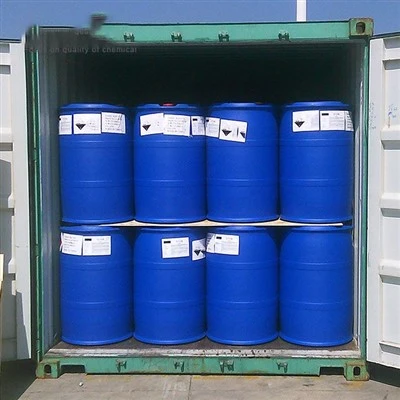
As a supplier of bulk materials, I know firsthand how crucial it is to ensure the quality and purity of the products we offer. Contaminants in bulk materials can lead to a whole host of issues, from product failure to safety hazards. That's why having reliable methods to detect the presence of contaminants is super important in our line of work. In this blog, I'll share some practical ways to detect those pesky contaminants.
First off, let's talk about physical inspection. This is probably the most basic and straightforward method. Just by taking a good look at the bulk materials, you can often spot some obvious signs of contamination. For example, if you're dealing with granular materials, look out for particles that are a different color, size, or shape. In liquids, any cloudiness, sediment, or separation could indicate the presence of contaminants. In the case of gases like Dimethyl Ether Gas, a visual inspection might be a bit trickier, but any unusual odor or the presence of unexpected droplets could be a red flag. We often do this type of inspection right when the materials are delivered to our warehouse. It's a quick and easy way to catch any big problems before they make it into our inventory.
Another common detection method is density measurement. Different materials have different densities, and if there are contaminants present, the overall density of the bulk material will change. For example, if you're selling a homogeneous liquid bulk product, you can measure its density using a hydrometer or a densitometer. If the measured density is different from the expected value, it could be a sign that there are other substances mixed in. This method works well for both liquids and solids. For instance, when we handle Isobutylene Gas 99.50%, we use specialized gas density meters to make sure the gas meets the specified purity levels.
Chemical analysis is really the heavy - hitter when it comes to detecting contaminants. There are several techniques in this category. One of the most popular ones is chromatography. Chromatography separates the different components in a sample based on how they interact with a stationary phase and a mobile phase. Gas chromatography is great for analyzing gaseous bulk materials, while liquid chromatography is more suitable for liquids. By comparing the chromatogram of the sample with that of a pure substance, we can identify any additional peaks, which represent contaminants. We use gas chromatography regularly to test the purity of Ethylene Oxide Gas as it's a very sensitive and accurate method.
Spectroscopy is another powerful chemical analysis technique. Infrared spectroscopy, for example, can tell us about the chemical bonds present in a material. Different chemical compounds absorb infrared light at different wavelengths. By shining infrared light on a sample of our bulk material, we can create an infrared spectrum that shows which bonds are present. If there are peaks in the spectrum that aren't supposed to be there, it means there are contaminants. UV - Vis spectroscopy can also be used, especially for materials that absorb light in the ultraviolet or visible range. This technique can help us detect the presence of certain organic or inorganic contaminants.
Microbiological testing is essential when dealing with bulk materials that can support the growth of microorganisms, such as food products, pharmaceuticals, or some types of liquid chemicals. We use various methods like plating techniques, where a sample of the bulk material is spread on a growth medium, and any bacterial or fungal colonies that grow can be counted and identified. There are also more advanced molecular methods like PCR (polymerase chain reaction) that can detect the DNA of specific microorganisms. For example, when we supply materials that could potentially come into contact with food, we always make sure to do thorough microbiological testing to ensure the safety of the end - product.
Particle size analysis can also be used to detect contaminants. In many bulk materials, the particle size distribution follows a certain pattern. If there are contaminants, it can disrupt this pattern. We use techniques like laser diffraction to measure the particle size of our bulk solids. If we see an unexpected shift in the particle size distribution, it could be due to the presence of foreign particles. This is particularly important for materials like powders, where the particle size can affect the performance of the final product.


When it comes to gas - based bulk materials, gas sensors are a convenient way to detect contaminants. There are different types of gas sensors, such as electrochemical sensors, which react with specific gases to produce an electrical signal. We use these sensors to continuously monitor the quality of N - Butene 99.50% during storage and transportation. If the sensor detects a change in the gas composition, it can alert us to the presence of contaminants.
Calibration is a key part of the detection process. We use calibration gases like Ethane Calibration Gas to make sure our detection equipment is accurate. Calibration gases have a known composition, so we can compare the readings of our instruments when analyzing these gases with the expected values. If the readings are off, we can adjust the equipment to ensure reliable and accurate contaminant detection.
As a bulk materials supplier, we're committed to providing high - quality products. Detecting contaminants is an ongoing process that involves a combination of these methods. We regularly train our staff on the latest detection techniques and invest in state - of - the - art equipment to ensure the purity of our bulk materials.
If you're in the market for bulk materials and are concerned about the presence of contaminants, we're here to help. We have a team of experts who can answer your questions and provide detailed information about our quality control processes. Whether you need Dimethyl Ether Gas, Isobutylene Gas 99.50%, or any of our other products, we can offer you the peace of mind that comes with knowing you're getting a pure and high - quality product. Reach out to us for a quote and let's start a conversation about your bulk material needs!