


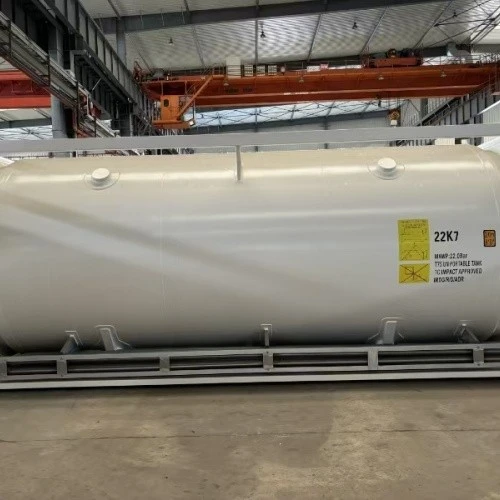

Product Overview
n-Butene 99.50%, also known as 1-Butene or Butylene, is a linear, gaseous mono-olefin with a carbon-carbon double bond. This product specification guarantees a minimum purity of 99.50% n-butene, making it a high-grade feedstock for demanding polymerization and chemical synthesis processes. As a key intermediate in the petrochemical value chain, high-purity n-butene is primarily used to manufacture polyethylene copolymers and other important chemicals. Its controlled molecular structure and high reactivity make this specific grade of n-butene essential for producing polymers with enhanced properties and precise compositions.
Basic Information
| CAS No. | 106-98-9 |
| UN No. | UN1012 (Butylene) |
| Molecular Formula | C₄H₈ (CH₂=CH-CH₂-CH₃) |
| Hazard Classification | 2.1 (Flammable gas) |
Key Attributes & Parameters
| Purity | Minimum 99.50% n-butene by weight (typically 99.50% - 99.80% range). |
| Key Impurities | Isobutene (<0.15%), trans-2-butene & cis-2-butene (combined <0.35%), butane (<0.1%). |
| Physical State | Colorless, flammable gas; typically stored and shipped as a liquefied gas under pressure. |
| Boiling Point | -6.3 °C (20.7 °F) at atmospheric pressure. |
| Vapor Density | Heavier than air (~1.94 relative to air). |
Features & Advantages
High-Purity Linear Monomer
The guaranteed minimum 99.50% n-butene content ensures a highly consistent and reliable comonomer for copolymer production, leading to predictable polymer performance.
Enhanced Polymer Properties
When used as a comonomer in LLDPE (Linear Low-Density Polyethylene) production, it introduces controlled short-chain branching, improving the film's toughness, flexibility, and tear strength.
Critical Chemical Intermediate
Serves as a primary raw material for producing butene-1 oxide, valeraldehyde, and other derivatives used in solvents, plasticizers, and specialty chemicals.
Precision Feedstock
Its specific grade makes it suitable for high-selectivity chemical processes where isomer purity significantly impacts catalyst performance and product quality.
Functional Characteristics
This high-purity n-butene primarily functions as a comonomer in Ziegler-Natta or metallocene-catalyzed copolymerization with ethylene to produce LLDPE. During polymerization, the butene molecules are incorporated into the polymer chain, creating controlled branches that lower density and modify crystallinity. Its chemical reactivity also allows it to undergo reactions such as hydration to produce secondary butanol, oxidation, and oligomerization. The product is supplied as a liquefied gas under pressure in cylinders, tube trailers, or via pipeline.
Primary Application Fields
Polymer Production (Primary Use)
Essential comonomer for manufacturing LLDPE resins used in flexible films (packaging, agricultural, stretch), injection molding, and rotomolding.
Chemical Synthesis
Feedstock for producing butene-1 oxide (used in surfactants, lubricant additives), valeraldehyde (for solvents, plasticizer alcohols), and linear oligomers (for synthetic lubricants, surfactants).
Polymer Modification
Used to modify properties of polypropylene (impact copolymer) and other polymers.
Fuel & Refining
Component in alkylation (to produce high-octane gasoline) and as a blendstock, though higher purity grades are typically dedicated to chemical use.
Customer Collaboration Case
A leading producer of premium cast-stretch film for industrial pallet wrapping was struggling with film consistency. Variations in the comonomer feed were causing fluctuations in the tensile strength and cling performance of their LLDPE. They required an exceptionally consistent, high-purity n-butene supply to act as the primary comonomer. We partnered with them, supplying our 99.50% minimum n-butene grade via a dedicated pipeline connection with real-time composition monitoring. The consistent, high-purity feed allowed their catalyst system to operate at peak efficiency, producing LLDPE resin with a perfectly uniform short-chain branching distribution. This resulted in a 40% reduction in film property variability, a 15% increase in ultimate elongation, and significantly improved load-holding performance. The reliable supply of our high-purity n-butene became a cornerstone of their quality control, enabling them to secure long-term contracts with major logistics companies and dominate the high-performance stretch film market segment.
FAQ
Hot Tags: n-butene 99.50%, China n-butene 99.50% manufacturers, suppliers, factory, Industrial Cyclopropane, N Butene 99 50 , 1 2 propadiene Allene , Pure Ethylene, Liquefied Propane Gas, Liquid Isoprene 99 50


