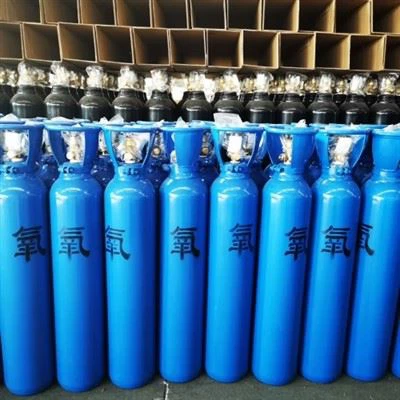
Hexafluoroethane, also known as R - 116 in the refrigerant world, is a colorless, odorless, non - flammable gas with several key industrial applications. As a hexafluoroethane supplier, I often get asked about how this useful gas is produced. So, let's dive into the details of its manufacturing process.
1. Starting Materials
The production of hexafluoroethane begins with carefully selected raw materials. The main elements involved are carbon and fluorine. Usually, carbon - containing compounds like carbon tetrachloride ($CCl_4$) or chloroform ($CHCl_3$) serve as the carbon source, while fluorine is often obtained from hydrogen fluoride (HF). These starting materials are readily available in the chemical market, and their quality is crucial for the overall production of high - purity hexafluoroethane.
2. Fluorination Process
The core step in making hexafluoroethane is the fluorination of carbon - containing compounds. There are a couple of methods to achieve this.
Swarts Reaction
One of the classic ways is through the Swarts reaction. In this process, a metal fluoride, typically antimony trifluoride ($SbF_3$), is used as a fluorinating agent. When carbon tetrachloride reacts with antimony trifluoride in the presence of a small amount of antimony pentachloride ($SbCl_5$) as a catalyst, a series of substitution reactions take place.
The first step involves the replacement of chlorine atoms in carbon tetrachloride with fluorine atoms. The reaction is as follows:
$3CCl_4 + 2SbF_3 \xrightarrow{SbCl_5} 3CCl_2F_2+ 2SbCl_3$
Here, carbon tetrachloride is converted into dichlorodifluoromethane ($CCl_2F_2$), also known as Freon - 12. This intermediate product can then undergo further fluorination to eventually form hexafluoroethane. However, the Swarts reaction has some limitations. It often requires relatively harsh reaction conditions and may produce a mixture of various fluorinated compounds, which need to be separated and purified later.
Direct Fluorination
Another method is direct fluorination. In this approach, elemental fluorine ($F_2$) reacts with carbon - containing compounds. For example, when methane ($CH_4$) reacts with fluorine, it follows a free - radical reaction mechanism.
$CH_4+ 2F_2 \xrightarrow{heat/or\ light} CH_2F_2 + 2HF$
The reaction doesn't stop at difluoromethane ($CH_2F_2$). With an excess of fluorine, further substitution occurs until hexafluoroethane is formed.
$2CH_2F_2+ 4F_2 \xrightarrow{heat/or\ light} C_2F_6+ 4HF$
Direct fluorination is a very exothermic reaction, which means it releases a large amount of heat. This heat needs to be carefully controlled to prevent side reactions and ensure the safety of the production process. It also requires special reactors and handling techniques because elemental fluorine is extremely reactive and toxic.
3. Purification and Separation
Regardless of which production method is used, the resulting product is usually a mixture of different fluorinated compounds, unreacted starting materials, and by - products such as hydrogen fluoride. Purification is a crucial step to obtain high - purity hexafluoroethane.
Distillation is one of the most common purification methods. Since different compounds have different boiling points, by carefully controlling the temperature during distillation, hexafluoroethane can be separated from other substances in the mixture. For example, hydrogen fluoride has a relatively low boiling point of 19.5°C, while hexafluoroethane boils at - 78.2°C.
Adsorption is another technique. Adsorbents like activated carbon or molecular sieves can selectively adsorb certain impurities, further improving the purity of hexafluoroethane.
4. Quality Control
As a supplier, I know that quality control is essential. We regularly test the hexafluoroethane we produce to ensure it meets the required standards. Purity, moisture content, and the presence of other impurities are all carefully monitored. Gas chromatography is a widely used analytical method for determining the purity of hexafluoroethane. It can accurately separate and quantify different components in the gas sample.
Other Related Chemicals in Our Product Line
In addition to hexafluoroethane, we also supply a range of other industrial gases. For example, Cryogenic Liquid Oxygen is commonly used in the medical field, as well as in metal cutting and welding processes. Nitrogen Dioxide CAS 10102 - 44 - 0 has applications in the production of nitric acid and as an oxidizer in rocket fuels.
We also offer Liquid Argon Gas, which is used in welding as a shielding gas to prevent oxidation of the weld area. Liquid Nitrogen has a variety of uses, from cryopreservation of biological samples to food freezing. And Sulfur Hexafluoride CAS 2551 - 62 - 4 is well - known for its use in electrical insulation and as a tracer gas in environmental studies.
Why Choose Our Hexafluoroethane?
Our hexafluoroethane is produced with strict quality control measures, ensuring high purity and consistent performance. Whether you need it for semiconductor manufacturing, where it's used as an etching gas, or for other industrial applications, our product can meet your requirements.


If you're interested in purchasing hexafluoroethane or any of our other industrial gases, we're here to have a chat with you. We can have a detailed discussion about your specific needs, quantities, and pricing. Just reach out, and let's start that procurement conversation.
References
- Chemistry textbooks on fluorine chemistry and industrial chemical processes.
- Published research papers on hexafluoroethane production and purification.